Choose an ecommerce PPC channel by the demand you want to reach and the result you can measure. Google Ads can combine Search, Shopping, and Performance Max; Microsoft Ads can extend search and product coverage; ChatGPT Ads offers a conversational advertising test where access is available. Give each channel a specific goal before dividing the budget.
Adding channels only helps if you can manage and measure them properly. Each platform needs a clear job, reliable inputs, appropriate conversion goals, and reporting that distinguishes captured demand from demand the account helped create. Without that structure, a brand can expand into more platforms while learning less from the total spend.
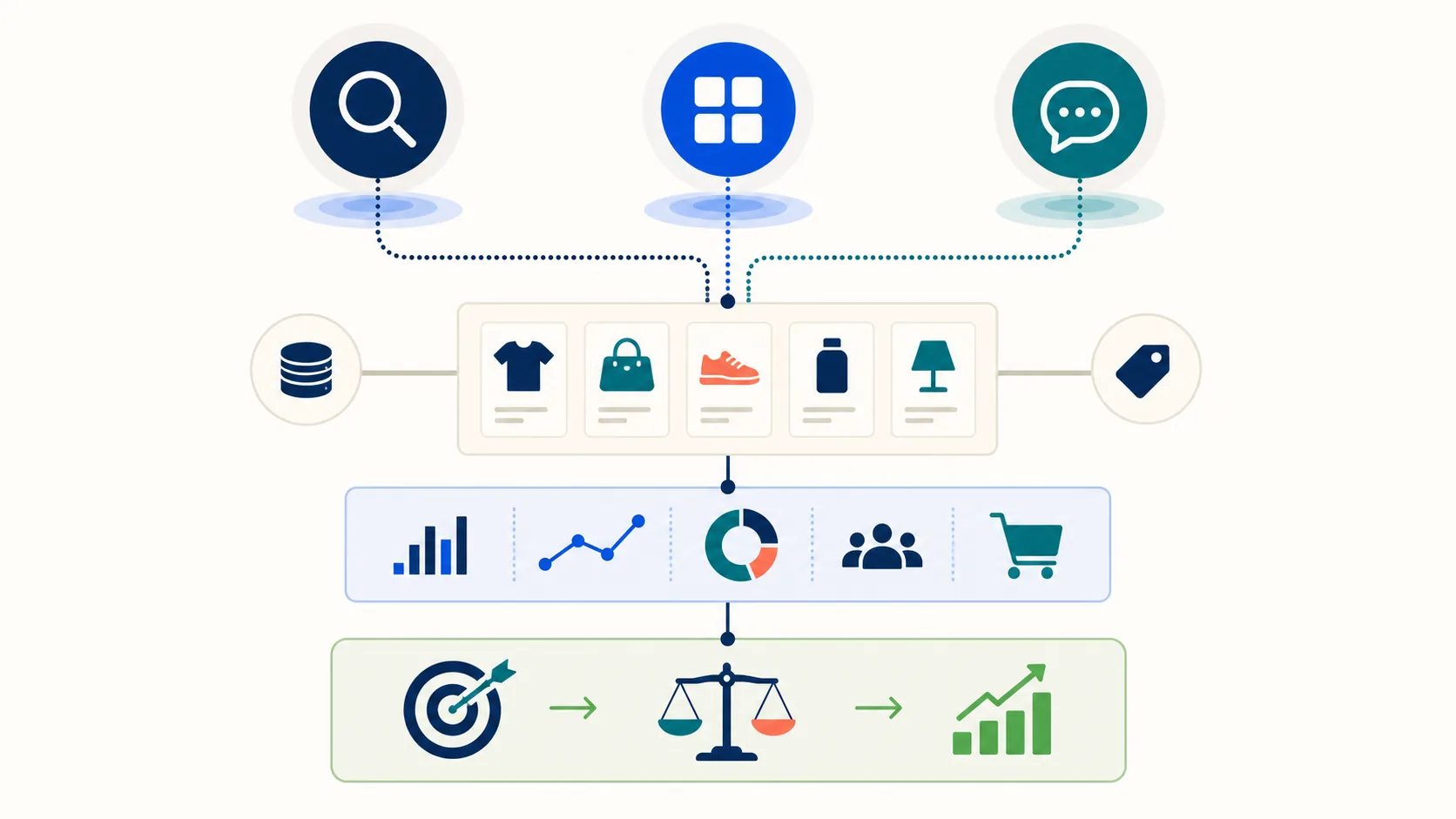
What ecommerce PPC management should cover
Good management starts before bid changes. I want to understand which products deserve growth, which categories are constrained by stock or margin, how the store records purchases, and whether the reported value is useful for decision-making. Then I can decide whether the account needs a rebuild, a focused cleanup, a feed correction, or a more controlled test.
- A documented account structure with clear roles for brand, non-brand, Shopping, and automated campaigns.
- Conversion tracking that separates primary business outcomes from secondary actions.
- Healthy product data, accurate landing pages, and a Merchant Center process with an owner.
- Budget and target decisions based on margin, inventory, customer value, and incrementality.
- Reporting that explains what changed, what it means, and what should happen next.
That is why I describe the service in terms of the work across the account, not just one platform. My existing guide to what ecommerce Google Ads management should include covers the same foundation in more detail.
What Google Ads is best at
Google Ads usually deserves the first layer of attention because it can connect high-intent Search, Shopping inventory, Performance Max automation, and detailed product data in one account. That does not mean every brand should use every campaign type. It means Google often has the broadest set of controls and the largest amount of existing demand to organize.
Search gives you a deliberate control point
Search is useful when the account needs clearer control over query themes, ad messaging, landing pages, negatives, and budget by intent. Brand, category, product, and competitor searches can have different economics and different expectations. I do not force them into one blended target if the business needs to understand what each type of demand is doing.
Shopping and Performance Max depend on product inputs
Shopping and Performance Max are only as useful as the catalog and conversion signals behind them. Titles, images, price, availability, promotions, product grouping, audience signals, and primary conversion actions all affect what the system can learn. Before changing targets, I check the feed and Merchant Center because a campaign cannot optimize around products it cannot accurately represent.
Google's overview of Shopping ads explains how Merchant Center product data and campaign settings work together to create and match product ads.
My feed health checklist is the starting point when product coverage or disapprovals could be part of the performance story.
Where Microsoft Ads can add value
Microsoft Ads can make sense when the Google account is measured, the feed is usable, and the team has enough operating capacity to evaluate another source of demand. Search and Shopping can extend coverage to a different audience and buying environment, but the opportunity should be measured against incremental profit and management cost. A new platform is not automatically valuable because it has a lower reported CPC.
Google Import can reduce setup time, but I treat an import as a starting point rather than a finished account. Budgets, bids, locations, conversion actions, negatives, product feeds, and policy requirements all need review. The account should also have a clear answer for what Microsoft Ads is expected to add.
Where ChatGPT Ads fit today
ChatGPT Ads are a newer, evolving channel built around conversational context rather than a traditional keyword-only search results page. Advertiser access, campaign objectives, measurement, and catalog options can vary by market and account. Check the current setup documentation and your account before planning a test. That makes it relevant to discuss, but not responsible to present as a mature replacement for Google or Microsoft Ads.
For an ecommerce brand, the initial question is fit. Does the catalog support clear product discovery? Can the brand create useful, specific creative? Is the landing page ready for a shopper who may be comparing options rather than typing a known category phrase? Can the business separate early learning from proven incremental revenue?
How to choose the right channel mix
I choose channels by job, not novelty. Google Search may reach shoppers already looking for a brand or product. Shopping and Performance Max may organize product discovery and automated coverage. Microsoft Ads may add reach and a useful comparison point. ChatGPT Ads may test a new conversational discovery environment. The right mix depends on demand, economics, data quality, and the team's ability to manage the work.
- Start with the channel that already has meaningful demand and the clearest measurement.
- Expand only when the catalog, tracking, landing pages, and reporting can support the new channel.
- Define the job of every platform before assigning budget.
- Use account-level economics instead of comparing isolated platform ROAS figures.
- Review incrementality, new-customer contribution, margin, and operational effort together.
How to compare performance across platforms
Cross-channel reporting should use consistent definitions without pretending the platforms are identical. I want a shared view of spend, orders, revenue, contribution margin where available, new-customer indicators, assisted behavior, and tracking quality. I also annotate changes in promotions, inventory, pricing, attribution settings, and landing pages.
The goal is not to declare a permanent winner. It is to decide whether more budget, better inputs, a different target, or a pause is justified. A platform with less volume may still be useful if it adds profitable incremental demand. A platform with strong reported ROAS may deserve less budget if it mostly captures demand the brand already created.
For ongoing reporting and reviewed next steps, Dashboard keeps account health and recommendations in view.
What to expect from a PPC consultant
A consultant should be able to explain what the account is trying to accomplish, which evidence supports the recommendation, and what could make the conclusion wrong. You should get clear priorities, a change log, practical communication, and a willingness to say when expansion is premature. The work should connect campaign decisions to product economics and business constraints rather than treat the ad account as an isolated dashboard.
When outside management makes sense
Outside management is most useful when the account has meaningful complexity, the internal team needs a second set of eyes, or channel expansion is creating more questions than answers. It may not be the right fit if tracking is unavailable, the catalog is unstable, the store is not ready to fulfill demand, or the business needs a short-term media plan without ongoing implementation.
If you want to discuss the current mix, see the ecommerce PPC management service or book a strategy call with the account context you already have.